
Cabinet Buying Guide for Bethesda, MD
Describe the result you want so your cabinet inquiry has a clear starting point.
Send my cabinet inquiry
Or call (562) 203-3232. Calls only, we do not receive text messages.
A Bethesda cabinet purchase begins with a choice about the room, not a choice about the door color. Are you preserving a useful arrangement, changing the storage, or still deciding what problem to solve? Bethesda Cabinet Atelier helps you turn that answer into a buying brief that can be read alongside actual product proposals.
- Independent buying guidance
- Product inquiries
- Seller availability confirmed separately
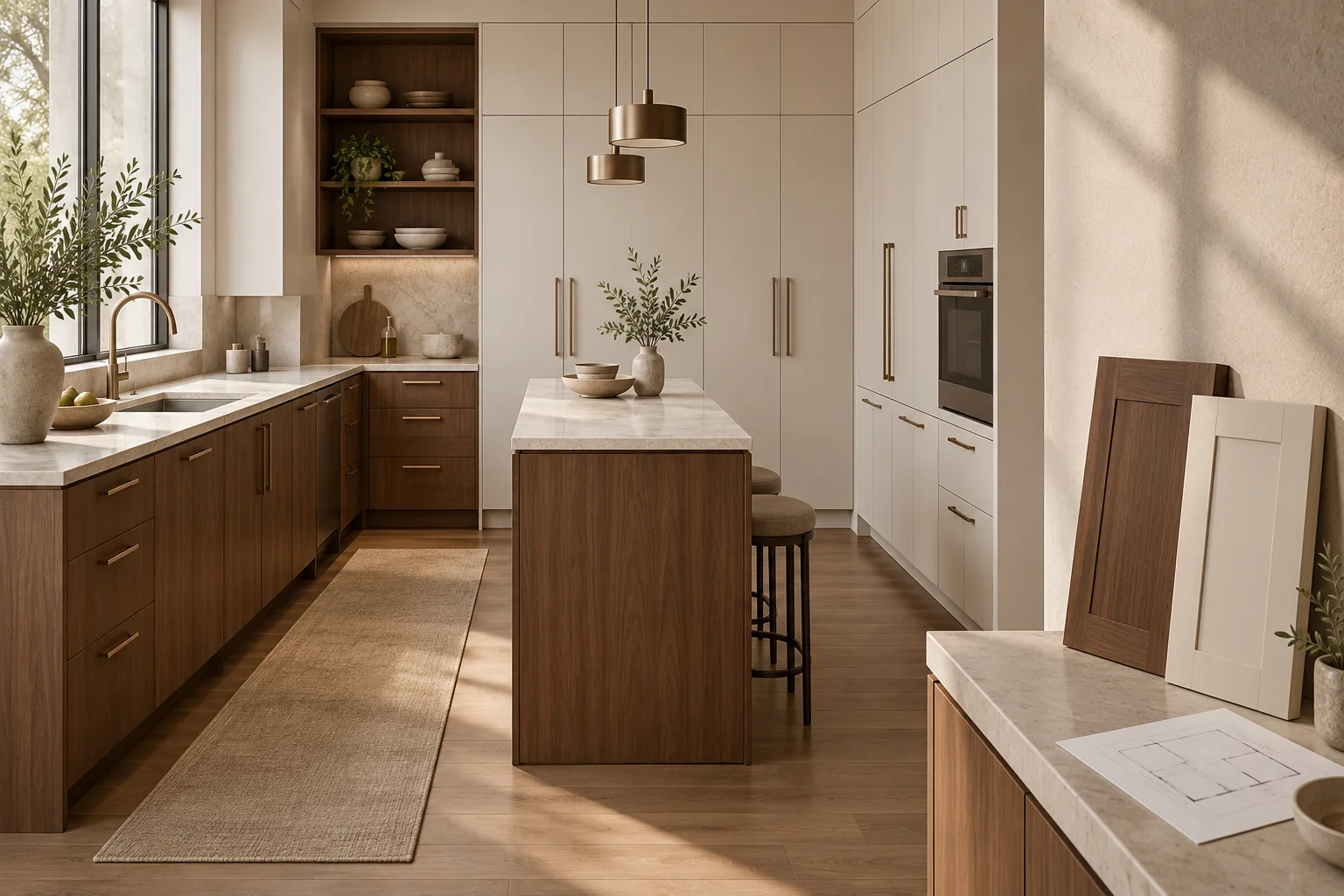
Cabinet product illustrations
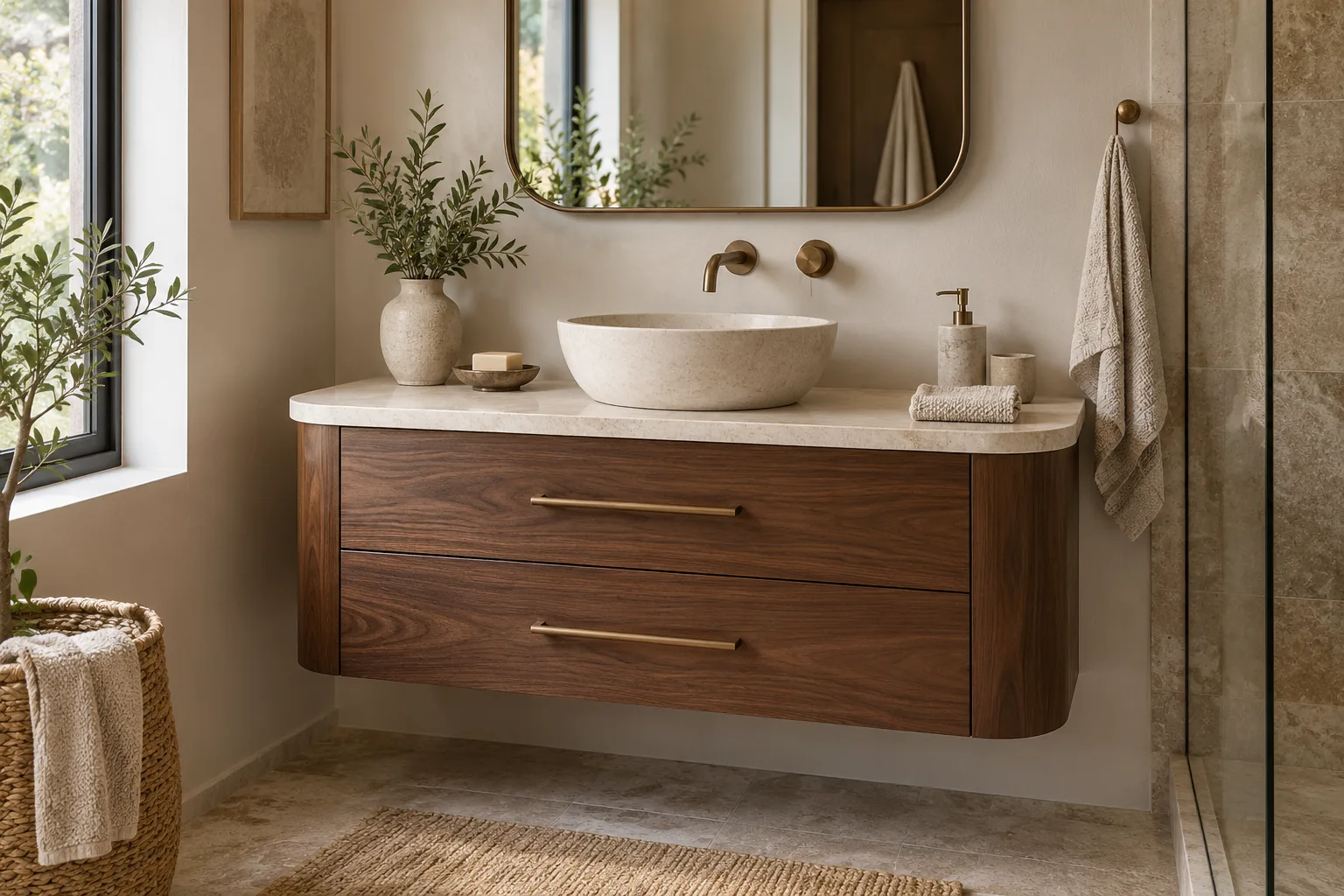
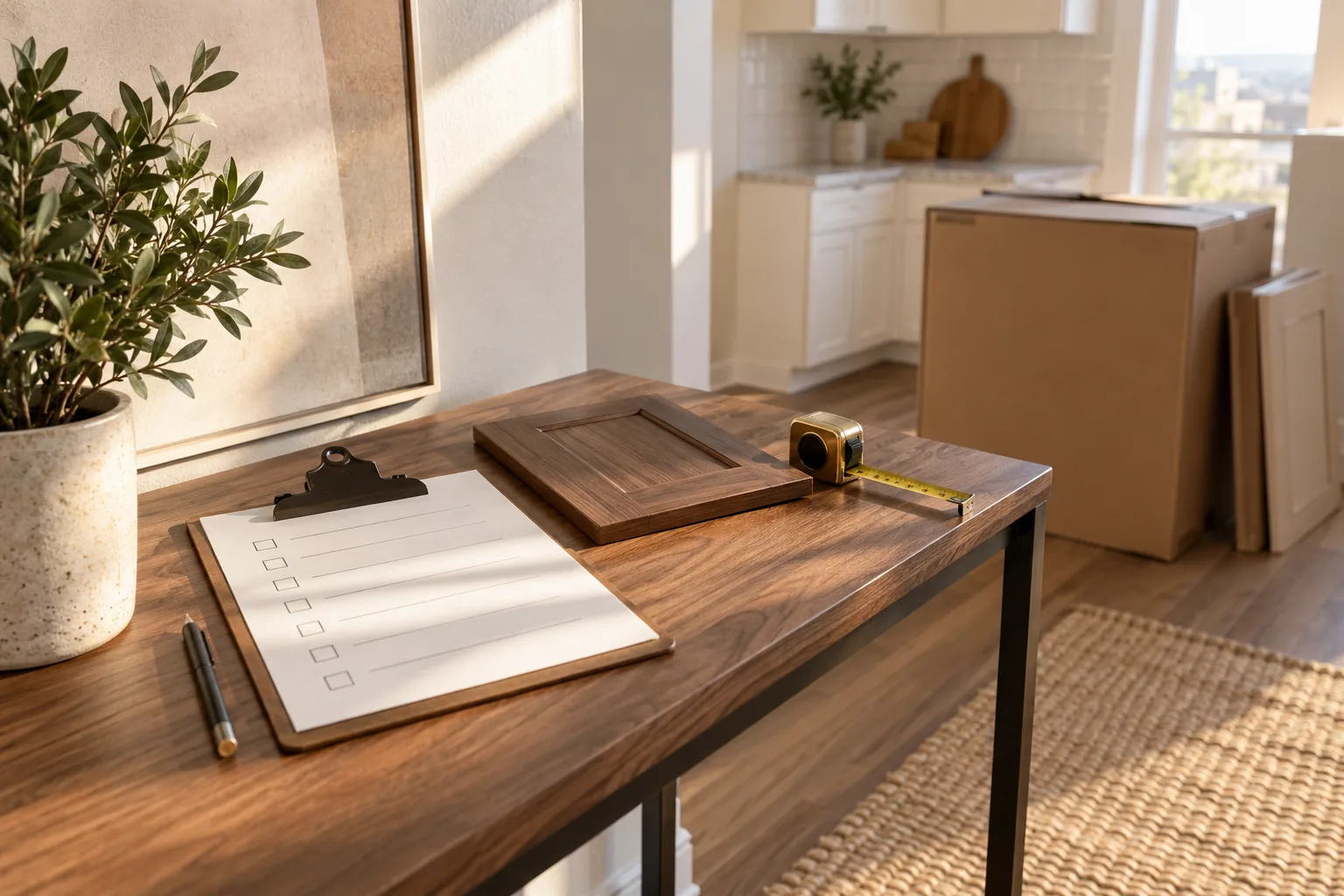
Illustrative product visualizations, not completed work, local properties or supplier facilities.
Prepare the purchase before choosing a supplier
The Atelier publishes independent purchasing information. Submitted form details are recorded for the owner’s review; they are not automatically sent to sellers and do not guarantee a response. Start with the decisions below, then use the specialist guides to investigate the part of the purchase that is still uncertain.
About Bethesda Cabinet Atelier
Know who handles each part
Independent cabinet buying information and quote-request service. We do not manufacture, stock or install cabinets. A referral, supplier response, appointment or purchase is not guaranteed. Product availability, delivery and installation must be confirmed directly with the seller or separately engaged contractor.
Choose a result that you can describe
Name the difficulty you want the cabinets to address. An awkward reach, insufficient space for particular cookware and an appearance you no longer enjoy are different reasons to replace products. A proposed arrangement should explain how it responds to your reason. Otherwise, a pleasing rendering can quietly replace the original purpose of the purchase.
Consider a hypothetical buyer who likes the room’s general arrangement but dislikes searching behind items on a deep shelf. Their brief can describe what they store and where they want to reach it. They can ask about drawers or internal storage without assuming a particular accessory will fit every cabinet line. The seller’s answer should identify the actual offered configuration.
Give each preference a priority and a way to check it. For appearance, that may be a named finish and a sample. For storage, it may be the usable interior dimensions of a proposed unit. Keep a separate list of appealing possibilities so an optional feature does not become an unexplained requirement in every quote.
Build a room record before comparing products
A useful room record connects measurements to places. Label the walls, mark openings and note which appliances will stay. Add photographs that show the relationship between those features. A number with no wall reference cannot tell a reviewer whether it describes a cabinet run, an opening or the distance to an obstruction.
The supplied IKEA US planning guide supports bringing room measurements and retained appliance dimensions to a planning discussion. Use that as preparation, with the actual appliance model documentation where available. A photograph of a refrigerator is not a reliable statement of its required clearances. Ask whoever will approve the layout what additional information they need and who confirms the final dimensions.
For the hypothetical storage improvement, record the existing run separately from the desired change. Mark rough measurements as preliminary and give the sketch a date. If you later move an appliance in the proposal, revise the affected wall record as well. This keeps a comparison from combining old dimensions with a new idea that has not been checked.
Use locality to ask a specific question
Montgomery Planning’s West County page identifies Bethesda, Friendship Heights, North Bethesda and Potomac as distinct planning communities. That is a useful reason to record the actual project locality instead of assuming every nearby address belongs to the same planning context. It does not describe an individual building or promise that a seller accepts the order.
For your brief, identify the project address and ask the responsible property contact about any conditions that affect the proposed work or receiving. When a building is managed, ask its management about the actual delivery process. When you control the receiving route yourself, document that route directly. Neither question requires assuming a particular kind of Bethesda home.
The location guides develop different checks: jurisdiction at Friendship Heights, present conditions at North Bethesda and a verified route at Potomac. Read the one that matches the address, then carry its useful questions back into the purchase record. A place label is context for investigation, rather than a substitute for the room facts.
Read a proposal as a set of decisions
Connect each proposed item to a position or purpose in the room. Ask for the product line, configuration, finish and quantities rather than relying on a single description such as complete kitchen. Identify panels, fillers, trim and accessories that accompany the boxes. A total without those details gives you little basis for understanding an alternative.
Compare a change by naming the rows it affects. If one proposal changes a door cabinet to a drawer configuration, describe that as a product difference and investigate the storage benefit. If another changes the overall layout, treat that as a separate version. Both might be worth considering, but they answer different questions.
Request written construction information for important preferences. The KCMA source identifies a kitchen and vanity performance standard; it does not certify an unidentified product in your quote. Ask what evidence applies to the exact proposed line. Keep a sample, specification or certification question attached to that line so evidence for one option is not casually transferred to another.
Separate the cost of goods from the cost of completing the room
Begin the comparison with box quantities and configurations, then account for finish choices, accessories and accompanying pieces. Ask what freight or pickup charges cover and where the goods will be handed over. Carrying, assembly and storage may need their own arrangements. Identify those tasks before deciding that two totals describe an equivalent purchase.
External labor belongs in the agreement of whoever supplies it. Removal, installation, countertop coordination and other trades should not appear as assumed benefits of a cabinet product quote. The FTC’s advice about written home improvement estimates supports comparing the scope and materials of separately engaged work. It does not supply a price for this project.
For the storage example, compare a modest product change with a broader replacement by showing both the different goods and the different tasks. Preliminary estimates remain subject to change, and the final written quote should state the offered price and inclusions. An unpriced task is an open budget question, not a saving you can count.
Prepare a brief that makes the next decision visible
Finish with a short explanation of where you are in the purchase. You may be exploring storage arrangements, comparing named products or waiting for a final room condition. State that stage alongside the address, sketch, product priorities and intended timing. It helps someone reviewing the record understand which answer would move the project forward.
List the unresolved items as questions assigned to a responsible party. A product seller can describe its offered units and terms; a property contact can explain building conditions; the person approving measurements can establish the drawing they will rely on. Keeping those questions separate prevents an encouraging general conversation from being mistaken for final approval.
Before ordering, bring the chosen schedule, drawing and quote to the same version. Check that a later finish change has not left an earlier accessory list in the record. Name the purchaser who approves the order and the receiver who checks the shipment. These final checks turn a useful initial brief into a record that can support an actual purchasing decision.
Inquiry process
From buying questions to a possible supplier quote
Sending an inquiry does not reserve products or book work.
Describe the purchase
Include project ZIP, room, approximate cabinet list and preferred timing.
Clarify requirements
Identify assembly, access, measurements and any separately arranged labor.
Confirm referral availability
An inquiry can be referred only if a suitable seller accepts the location and product request.
Review seller terms
Confirm the final drawing, itemized price, payment, delivery and return terms directly before ordering.
Local buying information
Local inquiry guides
Questions
Questions Bethesda homeowners ask
What should I decide before requesting my first cabinet proposal?
Identify the room problem, the arrangement you expect to retain and the features you want to investigate. You do not need every product selected. You do need to distinguish a preference from a confirmed dimension so the initial proposal can label its assumptions.
Can a photograph replace a measured room sketch?
Use photographs to show context and a labeled sketch to show dimensions. Retained appliances need their own identification and dimensional information. The person responsible for the final layout should tell you what must be checked before the drawing becomes an order instruction.
How can I compare a small storage change with full replacement?
Keep them as separately named versions. Show which boxes, accompanying pieces and external tasks differ. Then assess whether the broader option provides benefits you value enough to justify its actual offered scope, rather than comparing two unexplained totals.
What does a local planning community tell me about the purchase?
It identifies a context for finding the appropriate locality information. It does not establish your building type, room dimensions, receiving rules or seller acceptance. Record the address and obtain answers for that property and the actual proposed goods.
Send my cabinet inquiry
Or call (562) 203-3232. Calls only, we do not receive text messages.
Talk to us about your project
Describe the purchase and project ZIP in Bethesda. Supplier acceptance and any referral are confirmed separately; no visit or quote is booked by this form.
Calls only, we do not receive text messages.